
Choosing a broker is not only about spreads, platforms, or leverage. One of the most important questions for any trader is straightforward: what markets can I actually trade, and how flexible is my access to them?
NordFX positions itself as a multi-asset broker, offering traders access to a wide range of financial instruments across global markets. This guide provides a clear, practical overview of the main asset classes available on NordFX, how they are typically traded, and what traders should consider before choosing a specific market.
Forex Market: Major, Minor, and Exotic Currency Pairs
Forex trading remains the core market for many traders, and NordFX provides access to a broad selection of currency pairs.
Major Currency Pairs
Major pairs include the most liquid and widely traded currencies in the world, typically involving the US dollar. Examples include:
-
EUR/USD
-
GBP/USD
-
USD/JPY
-
USD/CHF
These pairs generally offer tighter spreads and higher liquidity, making them suitable for both beginners and experienced traders.
Minor Currency Pairs
Minor pairs do not include the US dollar but still involve major global currencies, such as:
-
EUR/GBP
-
EUR/JPY
-
GBP/JPY
Liquidity is usually slightly lower than majors, but they can provide additional trading opportunities, especially during regional market sessions.
Exotic Currency Pairs
Exotic pairs combine a major currency with a currency from an emerging or smaller economy, such as:
-
USD/TRY
-
EUR/ZAR
-
USD/THB
These instruments often have higher volatility and wider spreads. They are typically more suitable for traders who understand the specific economic and geopolitical factors influencing these currencies.
Cryptocurrency Trading: Major Coins and Altcoins
Cryptocurrencies have become a significant part of modern trading portfolios, and NordFX offers crypto trading through CFD instruments.
Major Cryptocurrencies
Traders can access widely recognized digital assets, including:
-
Bitcoin (BTC)
-
Ethereum (ETH)
These instruments are often preferred due to higher liquidity and stronger market participation.
Altcoins and Other Digital Assets
In addition to major cryptocurrencies, NordFX provides access to selected altcoins. These assets tend to be more volatile and can react sharply to market news, sentiment, and broader crypto trends.
Key Characteristics of Crypto Trading
-
Trading is available 24/7
-
High volatility creates both opportunity and risk
-
No ownership of the underlying asset when trading CFDs
Crypto CFDs are often used for short-term trading strategies or for diversification alongside traditional markets.
Commodities: Metals and Energy Products
Commodities play an important role in global markets and are often used for diversification or hedging purposes.
Precious Metals
NordFX allows trading in popular precious metals such as:
-
Gold (XAU)
-
Silver (XAG)
Gold, in particular, is widely regarded as a safe-haven asset and often reacts to inflation expectations, interest rate changes, and geopolitical uncertainty.
Energy Commodities
Energy products, such as oil, are also available. These instruments are influenced by:
-
Global supply and demand
-
OPEC decisions
-
Geopolitical developments
Commodity markets can experience strong trends, making them attractive for both technical and fundamental traders.
Stock Indices: Global Market Benchmarks
Stock indices provide exposure to entire equity markets rather than individual companies. Trading indices allows traders to speculate on the overall performance of a region or sector.
Examples typically include:
-
US indices
-
European indices
-
Asian market benchmarks
Index trading is often favored for:
-
Lower company-specific risk compared to individual stocks
-
Clear reaction to macroeconomic news
-
Strong intraday volatility during major sessions
Stock CFDs: Trading Shares Without Ownership
NordFX also offers stock CFDs, allowing traders to speculate on the price movements of individual companies without owning the underlying shares.
Key Features of Stock CFD Trading
-
Ability to trade both rising and falling markets
-
No need to manage physical share ownership
-
Access to well-known global companies
Stock CFDs are commonly used by traders who want exposure to equities while maintaining flexibility in position sizing and strategy.
How These Markets Are Traded: CFDs Explained
Most instruments on NordFX are traded as Contracts for Difference (CFDs). This means traders are not buying or selling the underlying asset but instead speculating on price movements.
Key Characteristics of CFDs
-
Ability to go long (buy) or short (sell)
-
Use of leverage, which increases both potential profits and risks
-
No ownership rights or dividends on underlying assets
CFDs are best suited for traders who understand margin trading and apply proper risk management.
Choosing the Right Market for Your Trading Style
Different markets suit different trading approaches. Understanding how each asset behaves can help traders make more informed decisions.
-
Forex: Suitable for day trading, scalping, and long-term macro strategies
-
Cryptocurrencies: High volatility, often used for short-term or momentum strategies
-
Commodities: Useful for trend trading and diversification
-
Indices: Balanced exposure to broad markets, popular for intraday trading
-
Stocks: Company-specific opportunities driven by earnings and news
Many traders choose to combine multiple asset classes to reduce reliance on a single market.
Risk Considerations Across Markets
Each asset class carries its own risk profile:
-
Forex risks include leverage and sudden macroeconomic events
-
Crypto markets can experience sharp, unpredictable price swings
-
Commodities are sensitive to geopolitical and supply-chain developments
-
Indices can move rapidly during major economic releases
-
Stocks are exposed to company-specific news and earnings results
Effective risk management, including position sizing and stop-loss usage, is essential regardless of the market traded.
Final Thoughts
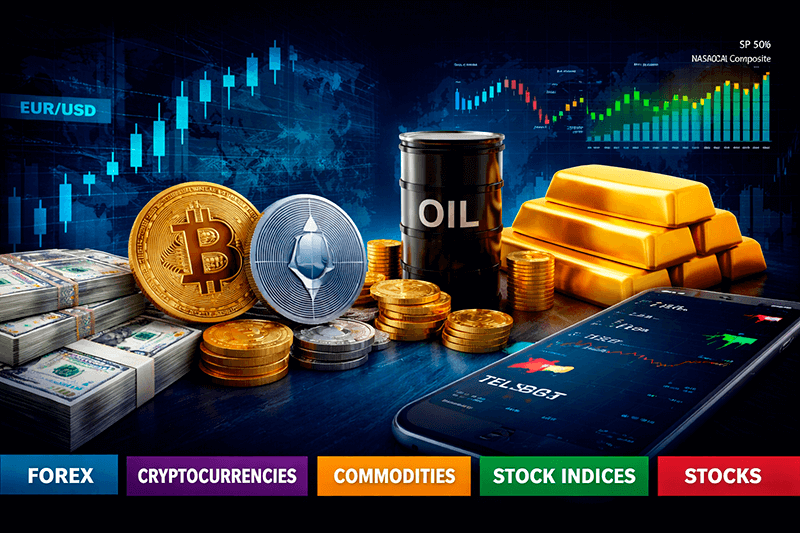
NordFX provides access to a broad range of trading instruments across forex, cryptocurrencies, commodities, indices, and stocks. This multi-asset approach allows traders to explore different markets, diversify strategies, and adapt to changing market conditions.
Understanding what each market offers—and the risks involved—is a crucial step before placing any trade. Rather than focusing on a single instrument, many traders find value in learning how different markets behave and selecting those that best align with their experience level, strategy, and risk tolerance.